Ever been asked to hand over your bank statement and wondered why? You’re not alone. In South Africa, bank statement verification is becoming increasingly common — and it’s not just a formality. Whether you’re applying for a loan, renting a flat, or even job hunting, this step plays a bigger role than you might think.
What Is Bank Statement Verification
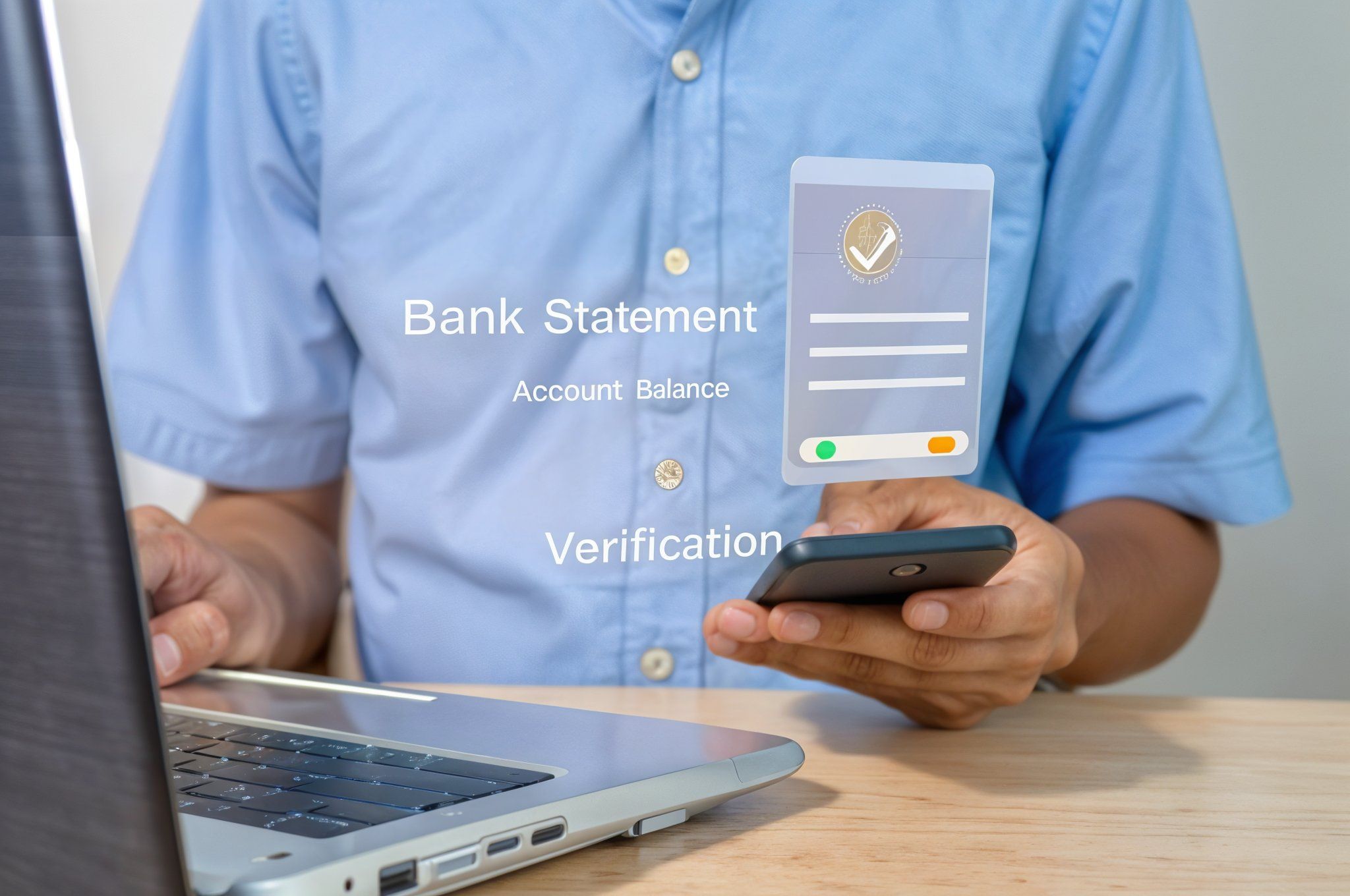
Bank statement verification is the process of reviewing and confirming the authenticity of an individual’s bank statement to ensure that all information is accurate, legitimate, and up to date. It plays a crucial role in various financial transactions in South Africa, from applying for loans to passing background checks for rentals or employment. Unlike a credit score, which provides a numeric summary of your financial reputation, bank statement verification gives a detailed look into your actual spending and income habits. This form of verification ensures that the person or entity presenting the statement is truly the account holder and that no tampering or fraud has occurred.
In South Africa, this process is gaining even more importance as financial institutions and businesses seek greater transparency and accountability. Bank statement verification helps organizations identify financial red flags such as suspicious transactions, insufficient income, or potential fraud. It’s a tool that supports financial integrity across different sectors. Whether it’s a landlord checking if you can afford rent or a bank confirming if you’re eligible for a loan, this verification adds a layer of trust and reduces risk for all parties involved.
What Information Is Verified
When a bank statement is submitted for verification, specific key details are carefully examined. The goal is to validate that the financial data is correct, genuine, and matches what the applicant has claimed. Verifiers look at your personal identification details, such as your name and bank account number, to confirm ownership. They also assess your monthly income, regular expenses, and transaction patterns to get a full picture of your financial behavior. Frequent overdrafts or a history of bounced payments may be red flags for lenders or landlords.
Here’s a breakdown of what is typically verified:
- Account holder’s full name – Must match the name on the application or ID.
- Bank account number – Used to ensure the statement belongs to the correct individual.
- Monthly income and expenses – Helps assess affordability for loans or rent.
- Transaction history – Shows how money flows in and out of the account.
- Account balance trends – Indicates saving habits or potential financial instability.
- Overdrafts and bounced payments – Signals financial mismanagement or risk.
These data points help build a full financial profile, offering insight into whether the individual is financially responsible and trustworthy.
Who Requests Bank Statement Verification
Government and Regulatory Bodies
In South Africa, government agencies and regulators often request bank statement verifications as part of their compliance and oversight duties. Institutions like SARS (South African Revenue Service) and the Financial Intelligence Centre (FIC) use verified bank statements to detect tax evasion, investigate illicit financial activity, or ensure accurate income reporting. This is particularly important in sectors like construction, imports, and high-cash businesses, where underreporting of income is more common.
These verifications help the government track suspicious transactions and enforce financial laws. Under the Financial Intelligence Centre Act (FICA), all accountable institutions are required to verify client identities and monitor financial behavior. Bank statements play a central role in this due diligence. Government verification processes typically focus on the following:
- Income declarations for tax purposes
- Unusual or high-value transactions
- Source of funds for large purchases or investments
- Consistency with reported earnings
- Evidence of financial misconduct or money laundering
This helps promote transparency, combat crime, and protect the financial system from abuse.
Financial Institutions
Banks and other financial institutions are among the most frequent users of bank statement verification in South Africa. When individuals apply for loans, credit cards, overdrafts, or even open new accounts, these institutions need to assess whether the applicant can meet their financial obligations. A bank statement gives lenders a deep dive into your financial habits beyond your credit score — such as whether you live paycheck to paycheck or manage your income wisely.
Lenders are especially interested in verifying regular income deposits, monthly expenses, and patterns of responsible financial behavior. The bank uses this information to assess the risk of lending you money. If they see irregular income or negative balances, your application may be rejected or flagged for further investigation. Financial institutions typically look for:
- Stable and regular income (such as salary payments)
- Evidence of recurring expenses (rent, loans, bills)
- Positive account balances over time
- Low frequency of overdrafts or NSF (non-sufficient funds) events
- Genuine documentation (unedited and from trusted banks)
Bank statement verification helps these institutions reduce fraud and ensure responsible lending.
Private Companies and Landlords
In South Africa’s competitive job and housing market, private companies and landlords are increasingly using bank statement verification as part of their screening process. For employers, especially in finance-related or high-trust roles, reviewing a candidate’s financial behavior can be a way to assess reliability and integrity. It may sound intrusive, but for jobs handling sensitive financial data or company funds, it’s often a necessary step.
Landlords also rely on verified bank statements to confirm that a tenant has a steady income and can afford monthly rent. This is especially crucial in cities like Johannesburg, Cape Town, and Durban, where demand for rental properties is high and landlords want to minimize risk. In these scenarios, bank statement verification typically focuses on:
- Consistent monthly income
- Evidence of rent or housing payments
- Affordability of the rent compared to income
- Spending habits that indicate financial stability
- Unedited and recent statements (usually 3–6 months)
For both employers and landlords, this simple step can make the difference between a trustworthy tenant or employee and a risky commitment.
Common Scenarios Where Bank Statement Verification Is Needed
Bank statement verification isn’t limited to just one part of life. In South Africa, it’s used across various industries and situations to confirm financial stability, prevent fraud, and ensure accountability. Whether you’re applying for a loan, renting a home, or starting a new job, having your bank statement verified has become an essential part of the process. This extra step helps institutions understand not just how much money you earn, but how you manage it — a key indicator of your overall financial health.
| Scenario | Who Requests It | Purpose | Required Time Period |
| Applying for a Loan | Banks, Credit Unions | Assess ability to repay debt and financial behavior | 3–6 months |
| Renting Property | Private Landlords, Rental Agents | Confirm regular income and ensure rent affordability | Usually last 3 months |
| Employment Verification | Employers (esp. finance/government) | Verify income stability and personal financial responsibility | 3–6 months |
| Immigration Applications | Visa/Immigration Officers | Prove sufficient funds for living abroad | 6 months or more |
| Buying on Credit/Installments | Retailers, Furniture/Car dealers | Determine if customer qualifies for installment purchases | 3 months minimum |
Applying for a Loan or Credit
When applying for a loan or credit facility in South Africa — whether it’s a personal loan, car finance, or credit card — banks and lenders need more than just your ID and income statement. They want to understand how you actually use your money. A bank statement tells a much deeper story than a payslip. It shows whether your income is consistent, how much you spend on essentials, and whether you’re living within your means or barely getting by.
Lenders use this information to assess your creditworthiness and to calculate your debt-to-income ratio. For example, if your statement shows frequent overdrafts or bounced debit orders, your application might be declined, even if your salary is decent. On the other hand, a steady stream of income with manageable expenses can speed up loan approval. Bank statement verification helps lenders protect themselves from bad debts and ensures that borrowers aren’t burdened with loans they can’t afford.
Renting Property
Renting in South Africa, especially in urban areas like Cape Town or Johannesburg, can be extremely competitive. Landlords and rental agents are now using bank statement verification as a screening tool to find reliable tenants. They want to know not just whether you have a job, but whether your lifestyle aligns with the rental price. This means looking at how much money comes in each month, how much goes out, and whether rent payments will be a stretch or a manageable expense.
Bank statements also help detect fraudulent applications. Unfortunately, fake payslips or references are sometimes used by prospective tenants, so landlords use verified bank statements to cross-check income and identify any red flags. This includes things like frequent late payments, gambling transactions, or unpaid debts. A clear, stable financial record increases your chances of securing a rental and shows landlords they can count on you to pay on time.
Employment Verification
In certain industries, especially finance, security, or government-related sectors in South Africa, your financial behavior can influence your employability. Employers in these fields may request a verified bank statement as part of their background checks. They’re not trying to be nosy — they simply want to ensure that potential employees are financially stable and not at risk of unethical behavior, such as theft, bribery, or fraud.
For instance, if you’re applying for a job that involves managing money, confidential accounts, or sensitive data, your employer might want to know that you handle your own finances responsibly. They may look at your income consistency, outstanding loans, or unusual spending habits. A clean and stable financial record builds trust, whereas excessive debt or irregularities might raise concerns. It’s about protecting the company as well as ensuring that the employee won’t be pressured by financial desperation.
Why It’s Crucial in South Africa
Bank statement verification isn’t just a bureaucratic step — it plays a vital role in South Africa’s financial ecosystem. The country faces unique challenges related to fraud, economic inequality, and financial transparency. As a result, verifying bank statements is now standard practice across many sectors, and it serves to protect both service providers and individuals from risks, scams, and financial instability.
Combatting Fraud and Money Laundering
South Africa has been battling issues of fraud, identity theft, and money laundering for years. Criminals often use fake documents or shell accounts to move money illegally or hide their true sources of income. Verified bank statements, especially when sourced directly from banks or through secure digital platforms, help authorities and financial institutions spot suspicious activity early on. This could include sudden large deposits, cash transactions without explanation, or foreign transfers that don’t align with a person’s job or lifestyle.
By requiring verified statements, banks and regulators are better able to meet FICA (Financial Intelligence Centre Act) obligations, ensuring that every transaction is traceable and legal. This isn’t just important for the economy; it’s also about national security and international trust. South Africa’s place in the global financial system depends on maintaining strong anti-fraud and anti-money-laundering safeguards — and bank statement verification is a frontline defense.
Ensuring Financial Responsibility
One of the main reasons behind bank statement verification is to ensure that people and businesses engage in financially responsible behavior. It’s not about judging someone for their choices — it’s about protecting everyone involved in a transaction. For instance, banks don’t want to lend money to someone who can’t repay it, and landlords want tenants who can consistently cover rent. Verifying a bank statement helps confirm that the person is managing their finances reasonably well.
In a country like South Africa, where millions are financially excluded or living paycheck to paycheck, this kind of verification helps service providers make informed decisions. It also protects vulnerable individuals from getting into financial agreements they simply can’t afford. For example, someone might think they can handle a car loan based on their gross salary, but their bank statement might reveal they’re already stretched thin. In this way, bank statement verification promotes fairness and prevents avoidable debt traps.
Verifying Identity and Address
Bank statements in South Africa often serve a dual purpose: they’re financial records, but also identity documents. Most statements include your full name, account number, and most importantly, your residential address. Because of this, many institutions use them to comply with KYC (Know Your Customer) requirements — laws that ensure customers are who they say they are.
This is especially useful in cases where someone might not have a utility bill or official proof of residence. A recent bank statement can fulfill both identity and address verification requirements, making it easier for people to access services like opening a bank account, applying for credit, or registering for municipal services. In rural or informal settlements where proof of address is harder to obtain, bank statements provide a practical alternative that meets legal standards while supporting inclusion.